
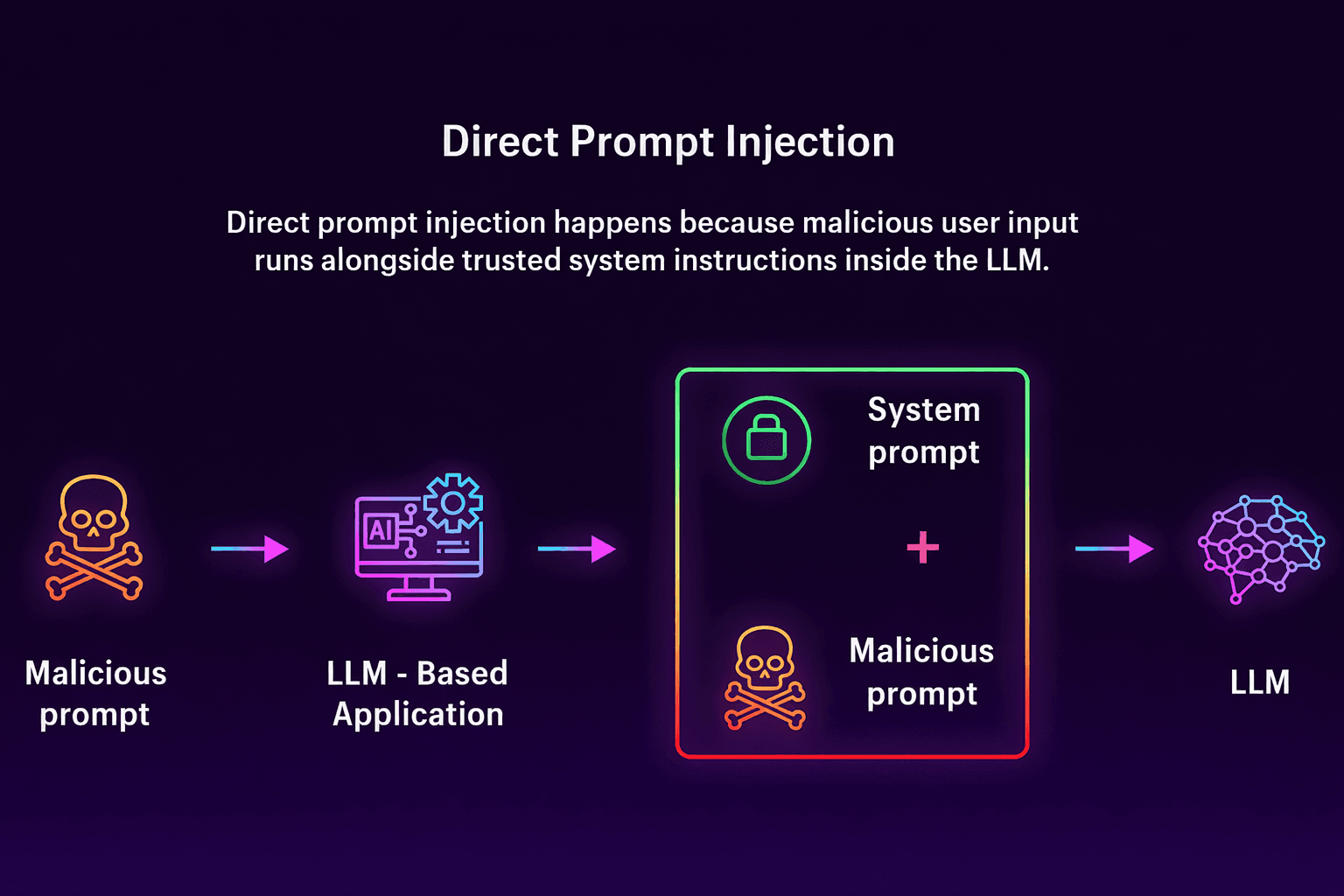
The AI systems respond directly to user inputs. The attacker is capable of controlling such inputs in order to affect the way the model is controlled. In the absence of designed prompt testing injection systems, organizations can run the risk of spreading sensitive data or permitting application of harmful instructions to supersede AI protections.
Advanced AI exploit testing is thus used by security teams to expose concealed vulnerabilities within the LLM-based applications. Such an initiative enables companies to safeguard their AI systems until attackers abuse them.
The Rise of AI Security Threats in Modern Applications
The artificial intelligence systems do not work like traditional software applications. They read natural language, produce answers, and communicate with internal sources of data. These strengths render them strong as well as open to attack.
In case an AI model is maliciously prompted, it can adhere to the instructions that are against the security policies. This behavior can be used by the attacker to manipulate the outputs or access confidential data.
When AI models are linked to internal business systems or knowledge bases, this risk becomes extremely high. Even a simple vulnerability, in such cases, can cause some severe risks of AI data leaks.
AI security should, therefore, be considered as part and parcel of cybersecurity by organizations that implement AI solutions.
The Arguments behind why Prompt Injection is a Major Security Threat
One of the most frequent threats to AI models is one that targets the rapid injection of the AI model today. Attackers design certain prompts by which the model is deceived to overlook safety guidelines or disclose confidential information.
In prompt injection testing, the security experts compare the model by creating malicious prompts and testing the way the model reacts. When the AI system obeys the instructions of the attacker, it shows that it is a critical vulnerability.
As an example, attackers can try to override system messages or obtain secret configuration information out of the model. With such methods, they can control AI behavior or evade security filters installed.
Constant prompt injection testing assists the organizations in noticing these weak points before attackers can use the same weaknesses in real-life situations.
Understanding LLM Exploit Techniques
Artificial intelligence systems are exploited through a high level of techniques by modern attackers. They are not aimed at conventional software vulnerabilities but are rather oriented at the manipulation of the logic of language models.
Such attacks can be prompt manipulation, adversarial cases, or underhanded instructions included in user queries. Water attackers are also able to modify AI responses or make the system disclose critical information when effective.
The structural AI exploit testing is conducted by security teams to examine AI models in these other hostile environments. This testing is done to analyze the logic of the model and also the infrastructure around it.
Controlled simulations allow specialists to identify vulnerabilities in AI security controls and enhance defenses prior to implementation.
Jailbreak Attack and Detection
AI jailbreak attacks take place when attackers breach the safety regulations that were installed in language models. Through well-orchestrated prompts, they are trying to make the AI system develop limited or dangerous information.
Such attacks are especially threatening in the context of enterprises that store sensitive business information in their AI models. In case jailbreak is successful, it can expose attackers to the confidential information or even manipulate the automated systems.
Testing involves jailbreak detection methods whereby the security team must test the ease with which a particular model can be counterfeited. It is accomplished by creating antagonistic prompts and evaluating the responses of the model.
Jailbreak testing is one of the aspects of AI security testing used by strong AI.
Artificial Intelligence Data Leakage and Exposure of Confidential Information
AI models would typically engage with internal databases, APIs, and document libraries. In case the security controls are weak, the attackers can exploit a timely manipulation to obtain sensitive data.
This poses a severe AI data leak risk in organizations that use AI applications. Model responses may end up exposing confidential documents, internal policies, or customer data.
In penetration testing, security experts strive to force the situation when a system based on AI discloses the guarded information. The tests assist organizations in having insights into the manner in which their AI models process sensitive data.
By discovering such vulnerabilities at an earlier stage, security personnel can exercise a greater level of control over data protection.
ELMA Deployment for Enterprise Applications
Secure AI cannot be built through testing only. There are also best practices in organizations of secure deployment of LLM.
Effective access controls, timely filtering systems, and constant monitoring systems should be incorporated by the security teams. Such techniques minimize the threat of AI manipulation by attackers.
Safety in integration with APIs, systems of authentication, and internal databases is also part of proper deployment strategies. This means AI models will not access sensitive information without a relevant authorization.
A synthesis of immediate testing of injection before deployment and secure deployment methodology provides greater defense against new threats of AI.
The AI-Security Threat Modeling Role of AI
Prevention of AI systems protection plays a significant role in proactive security planning. Before implementing AI solutions, organizations have to outline possible attack surfaces.
This is an AI threat model process. Security teams examine the way attackers can engage with the AI system, the potential entry points, and the vulnerabilities of the system.
Organizational threat modeling using an AI structure allows organizations to envision where an attack might occur and implement security controls to counter it.
This method can be used along with AI exploit testing to establish an all-encompassing base with regard to AI applications.
Why Businesses Need Professional AI Exploit Testing
The testing of AI security demands professional knowledge. Automated tools do not afford sufficient protection in detecting many of these vulnerabilities.
Advanced AI exploit testing is performed by professional security teams to create a simulated attack to apply real-world attack scenarios. These tests are used to measure AI models in terms of adversarial inputs, malicious prompts, and jailbreaks.
Complex prompt injection testing is also done by the security experts aimed at detecting concealed vulnerabilities in AI logic.
Companies investing in professional AI testing are able to implement AI systems with more certainty. They minimize the threats of AI data leakage risks, enhance secure LLM deployment, and increase durable AI platforms.
Improve Your AI Security PostureThe use of AI systems is becoming important in contemporary business operations. Nevertheless, what seems to be the strong features of AI threaten to pose complicated security problems.
Data is prone to abuse and exposure of AI systems by organizations that neglect to test their systems promptly, and those that use AI to flout testing. There are also new methods that attackers are still creating to use AI models and avoid the security controls.
In case your organization continues to use periodic testing cycles, the exposure window is not closed.
At Ploutosec, we do not concentrate on conventional methods of testing. We have extensive jailbreak detection, organized AI threat modeling, and extensive AI exploit testing, so our security professionals will detect the vulnerabilities ahead of the attacker.
Strategies do not mean waiting before a breach to expose the secret vulnerabilities of the company. The current business world needs an active and smart AI security test.
To find out how our high-level AI security testing services can be used to protect your organization, contact Ploutosec today at +1 (431) 306 2004 or at contact@ploutosec.uk
FAQs
What is prompt injection testing?
Prompt injection testing evaluates whether attackers can manipulate AI models using malicious prompts that bypass security rules.
Any risk of AI data leakage?
The risks associated with AI data leakage occur when the AI models come out accidentally and disclose confidential data by responding to or integrating this data.
And what is jailbreak detection with AI systems?
Jailbreak is tracked to avoid any attempts to break AI security and achieve fewer outcomes.
So what is the nature of secure CLLM deployment?
A safe implementation of LLM involves performing access controls, monitoring systems, instant filtering, and security testing.